Brochure Download

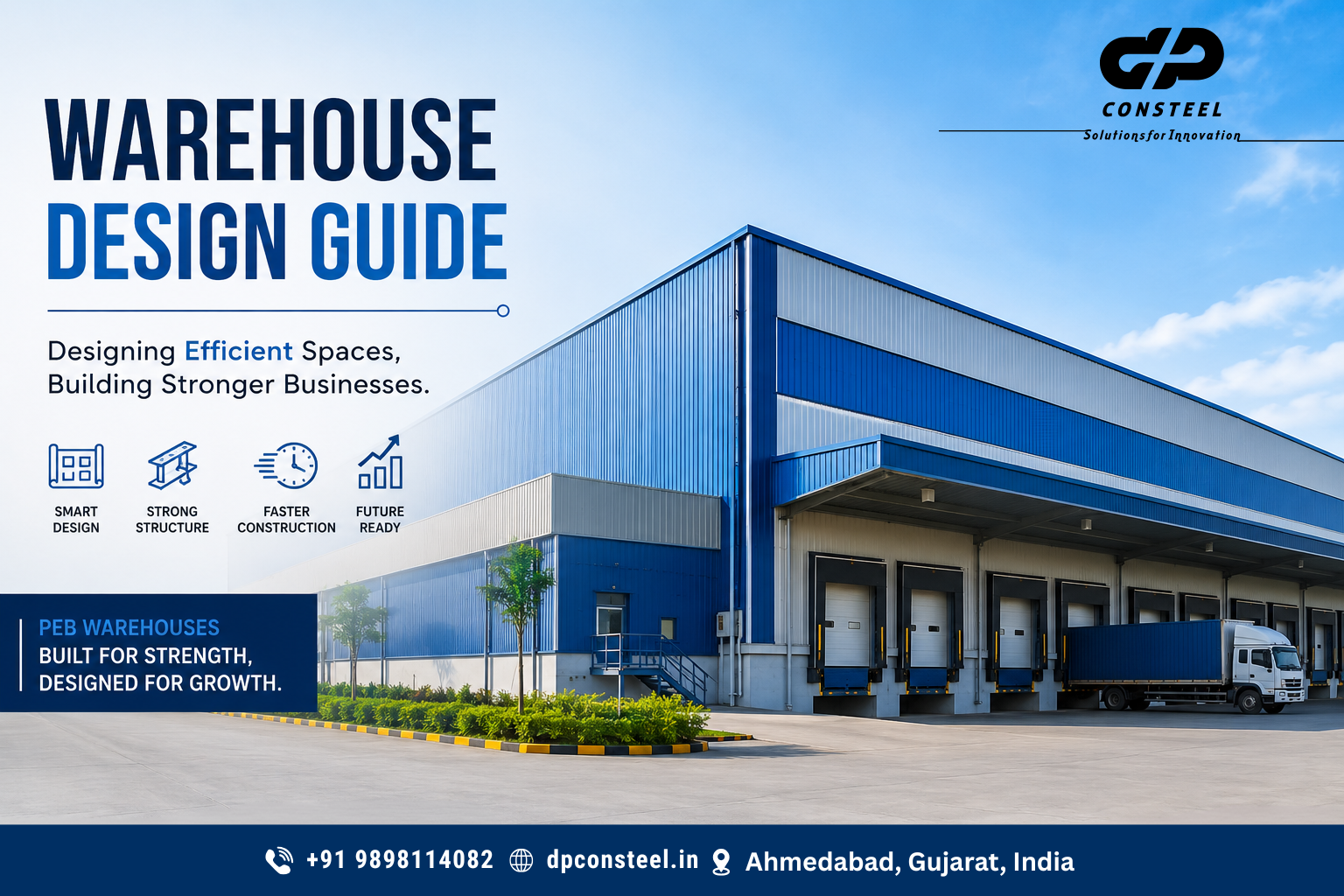
Warehouse Design Guide
Warehouse Design Guide | Complete Guide to Efficient Industrial Warehouse Design
Learn how to design an efficient industrial warehouse with this complete warehouse design guide. Discover key planning factors, warehouse layouts, PEB advantages, and why businesses choose a trusted PEB Manufacturer in Ahmedabad, PEB Manufacturer in Gujarat, and PEB Manufacturer in India for modern warehouse construction.
Warehouse Design Guide: Everything You Need to Know
A well-designed warehouse is the foundation of an efficient industrial operation. Whether it is used for manufacturing, storage, logistics, or distribution, the right warehouse design improves workflow, maximises storage capacity, and supports future business growth.
Modern industries are increasingly choosing Pre-Engineered Buildings (PEB) for warehouse construction because they offer faster installation, flexible layouts, and long-lasting performance. A properly planned warehouse not only increases operational efficiency but also reduces maintenance costs and construction time.
Businesses looking to build high-quality industrial facilities often partner with an experienced PEB Manufacturer in Ahmedabad, PEB Manufacturer in Gujarat, or PEB Manufacturer in India to ensure their warehouse is engineered according to industry standards and project requirements.
Why Warehouse Design is Important
Warehouse design is more than just constructing a building. It involves planning the layout, storage areas, movement of goods, loading and unloading zones, ventilation, lighting, and future expansion possibilities.
A properly designed warehouse helps businesses:
- Improve material handling efficiency
- Reduce operational delays
- Maximize available storage space
- Enhance employee safety
- Improve vehicle movement
- Lower maintenance costs
- Support future business expansion
- Increase overall productivity
A smart warehouse layout allows businesses to streamline daily operations while maintaining an organised working environment.
Key Factors to Consider Before Designing a Warehouse
Every industrial project has unique requirements. Before designing a warehouse, several important factors should be considered.
Location Selection
Choose a location that provides easy access to highways, transportation networks, suppliers, and customers. Good connectivity reduces transportation costs and improves logistics efficiency.
Warehouse Size
The warehouse should be designed according to present storage requirements while leaving enough space for future expansion.
Storage Requirements
Understanding the type of products being stored helps determine rack systems, storage height, floor load capacity, and aisle widths.
Material Flow
The movement of raw materials and finished products should be smooth with minimal congestion. Efficient material flow improves operational speed and reduces handling time.
Loading and Unloading Area
Proper dock planning ensures trucks can enter, load, and unload efficiently without disrupting warehouse operations.
Ventilation and Natural Lighting
Good ventilation and sufficient natural light improve the working environment while reducing energy consumption.
Safety Standards
Fire protection systems, emergency exits, clear pathways, and proper structural design ensure workplace safety and regulatory compliance.
Common Types of Warehouse Designs
Different industries require different warehouse configurations depending on operational needs.
Clear Span Warehouse
Provides a large column-free space, making it ideal for manufacturing units, logistics centres, and storage facilities.
High Bay Warehouse
Designed with greater vertical clearance to maximise storage capacity using advanced racking systems.
Low Bay Warehouse
Suitable for industries requiring moderate storage height and easy access to inventory.
Multi-Span Warehouse
Used for larger industrial facilities where multiple spans are required to accommodate increased floor area.
Industrial Warehouse
Designed specifically for manufacturing operations, production units, and heavy industrial applications.
Benefits of Choosing a PEB Warehouse
Modern warehouse projects increasingly use pre-engineered buildings because they offer several practical advantages over conventional construction.
Major Benefits Include
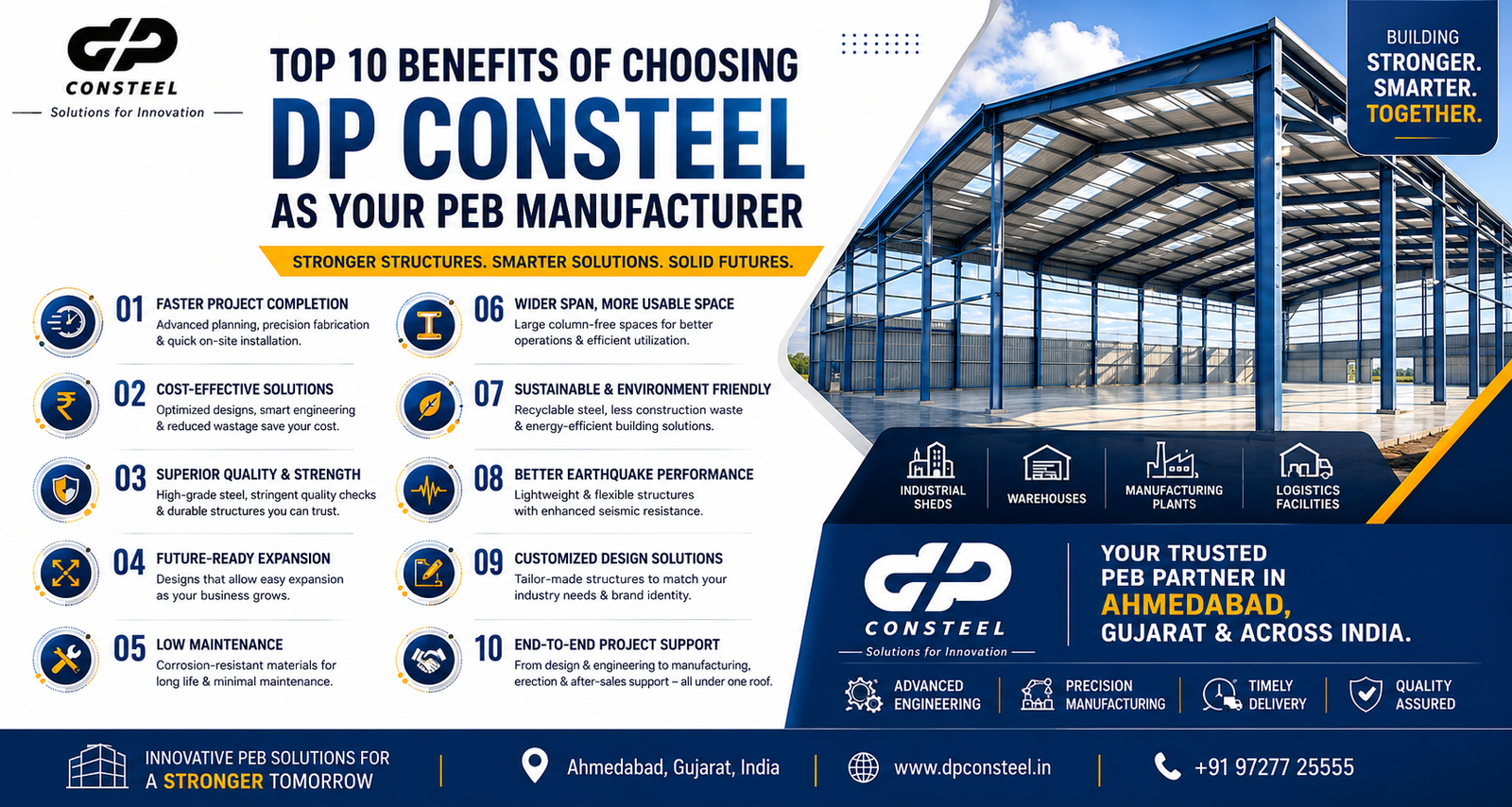
Faster project completion
Precision factory manufacturing
Cost-effective construction
High structural strength
Low maintenance requirements
Flexible building dimensions
Easy future expansion
Better quality control
Long service life
Sustainable steel construction
These advantages allow businesses to complete projects more efficiently while reducing long-term operational costs.
Industries That Use Modern Warehouse Design
Warehouse buildings are used across a wide range of industries where efficient storage and operations are essential.
Common Applications Include
Manufacturing industries
Logistics companies
Distribution centres
Engineering industries
Automobile sector
Textile industries
Food processing units
Pharmaceutical companies
Packaging industries
E-commerce warehouses
Each warehouse is designed according to operational requirements to ensure efficient material handling and maximum space utilisation.
Why Choose an Experienced PEB Manufacturer?
The success of any warehouse project depends on quality engineering, precision manufacturing, and professional installation. An experienced manufacturer ensures that every structural component is fabricated accurately and assembled efficiently on-site.
A trusted PEB Manufacturer in Ahmedabad delivers customised warehouse solutions designed for industrial performance and long-term durability.
Businesses across the state rely on an experienced PEB Manufacturer in Gujarat for steel structures that combine strength, flexibility, and cost efficiency. Similarly, companies throughout the country choose a reliable PEB Manufacturer in India for warehouses, factory sheds, and large-scale industrial infrastructure projects that meet modern industry requirements.
Future of Warehouse Design
As industries continue to expand, warehouse design is becoming more advanced and efficient. Businesses now prefer warehouse buildings that support automation, optimised storage systems, faster material movement, energy efficiency, and future scalability.
Pre-engineered buildings have become the preferred choice because they offer faster construction, superior engineering, and the flexibility to adapt as business requirements evolve. Investing in a well-planned warehouse today helps businesses improve productivity and remain competitive in the future.
Conclusion
A well-planned warehouse is essential for improving operational efficiency, maximising storage capacity, and supporting long-term business growth. From selecting the right layout to ensuring proper ventilation, safety, and future expansion, every aspect of warehouse design contributes to the overall performance of an industrial facility.
Choosing a trusted PEB Manufacturer in Ahmedabad, PEB Manufacturer in Gujarat, or PEB Manufacturer in India ensures that your warehouse is engineered with precision, built for durability, and designed to meet the demands of modern industries. Whether you are planning a manufacturing unit, logistics centre, factory shed, or industrial warehouse, a professionally designed PEB warehouse offers a reliable and cost-effective solution for long-term success.