Brochure Download

.png)
How Does a Crane Building Function?
How Does a Crane Building Function? | Complete Guide to PEB Crane Buildings
Learn how a crane building functions and why it is essential for heavy industrial operations. Discover the working principle, benefits, and applications of PEB crane buildings.
How Does a Crane Building Function?
A crane building is a specially engineered industrial structure designed to support overhead cranes that lift, move, and position heavy materials safely within a facility. These buildings are commonly used in manufacturing plants, fabrication units, engineering workshops, automobile industries, and heavy industrial facilities where efficient material handling is essential.
Unlike conventional industrial buildings, crane buildings are designed to withstand both the weight of the crane and the dynamic loads generated during lifting operations. The structural framework is carefully engineered to ensure stability, precision, and long-term durability while allowing cranes to operate smoothly across the entire building.
Businesses planning heavy-duty industrial infrastructure often choose an experienced PEB Manufacturer in Ahmedabad, PEB Manufacturer in Gujarat, PEB Manufacturer in India, PEB Structure Manufacturer in Ahmedabad, PEB Structure Manufacturer in Gujarat, or PEB Structure Manufacturer in India to design and manufacture reliable crane building systems.
Working Principle of a Crane Building
A crane building functions by integrating an overhead crane system with a precision-engineered steel structure. The crane travels along specially designed runway beams mounted on steel columns, allowing heavy materials to be lifted and transported efficiently across the production area.
The structural system distributes crane loads safely through the steel framework to the building foundation. This ensures smooth crane movement while maintaining structural stability during continuous industrial operations.
Key Functional Advantages
-
Smooth material movement
-
Safe heavy-load handling
-
Improved production efficiency
-
Better workflow management
-
Reduced manual handling
-
Reliable structural performance
-
Flexible operational layout
-
Future expansion capability
These advantages help industries improve productivity while maintaining workplace safety.
Key Components That Support Crane Operations
Every crane building is designed with structural members that work together to ensure efficient crane movement and long-term reliability.
Major Components
- Steel columns
- Crane runway beams
- Roof rafters
- Bracing systems
- Gantry girders
- Purlins and girts
- Connection plates
- High-strength fasteners
Each component is engineered according to crane capacity, building dimensions, and operational requirements.
Why Crane Buildings Are Preferred
Industries handling heavy equipment require buildings that support continuous lifting operations without affecting structural performance.
Crane buildings provide excellent load-bearing capacity, operational flexibility, and efficient material handling, making them an ideal solution for modern manufacturing facilities.
Applications of Crane Buildings
Crane buildings are widely used across industries that depend on heavy material movement and precision manufacturing.
Common Applications
- Steel fabrication plants
- Manufacturing facilities
- Engineering workshops
- Automobile industries
- Heavy machinery plants
- Industrial warehouses
- Power equipment manufacturing
- Material handling facilities
Every building is customised according to production requirements and crane specifications.
Benefits of PEB Crane Buildings
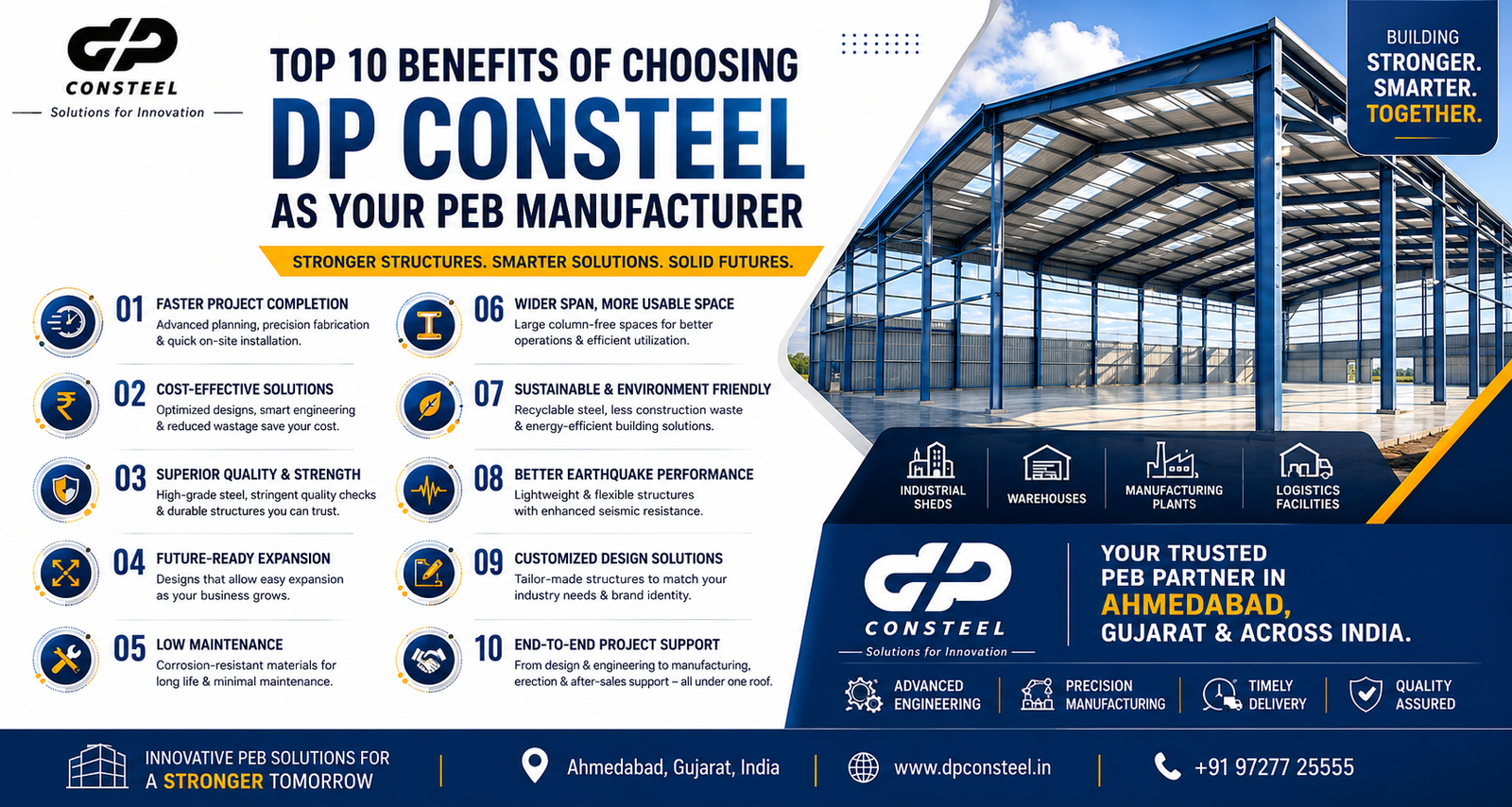
Pre-engineered buildings have become the preferred choice for crane buildings because they combine structural strength with efficient construction techniques.
Major Benefits
Faster project completion
Precision-engineered steel structures
High load-bearing capacity
Factory-controlled fabrication
Flexible building layouts
Lower maintenance requirements
Future-ready expansion options
Long-term structural durability
These benefits help industries achieve reliable operations while optimising construction costs and project timelines.
Choosing the Right PEB Manufacturer
Selecting an experienced manufacturing partner is essential for a successful crane building project.
A trusted PEB Manufacturer in Gujarat combines advanced engineering, precision fabrication, and strict quality control to deliver crane buildings that meet industrial standards.
Likewise, an experienced PEB Structure Manufacturer in India provides customised crane building solutions designed for safe operations, efficient material handling, and long-term industrial performance.
Conclusion
A crane building functions as the backbone of heavy industrial operations by enabling the safe and efficient movement of materials within a facility. Its precision-engineered steel framework supports overhead cranes while ensuring structural stability, operational efficiency, and long-term durability.
Whether you are developing a manufacturing plant, fabrication unit, engineering workshop, or heavy industrial facility, partnering with an experienced PEB Manufacturer in Ahmedabad, PEB Manufacturer in Gujarat, PEB Manufacturer in India, PEB Structure Manufacturer in Ahmedabad, PEB Structure Manufacturer in Gujarat, or PEB Structure Manufacturer in India ensures a high-quality crane building designed for reliable performance, safety, and future growth.